

Last night I saw Bikini Kill at Union Transfer in Philadelphia.
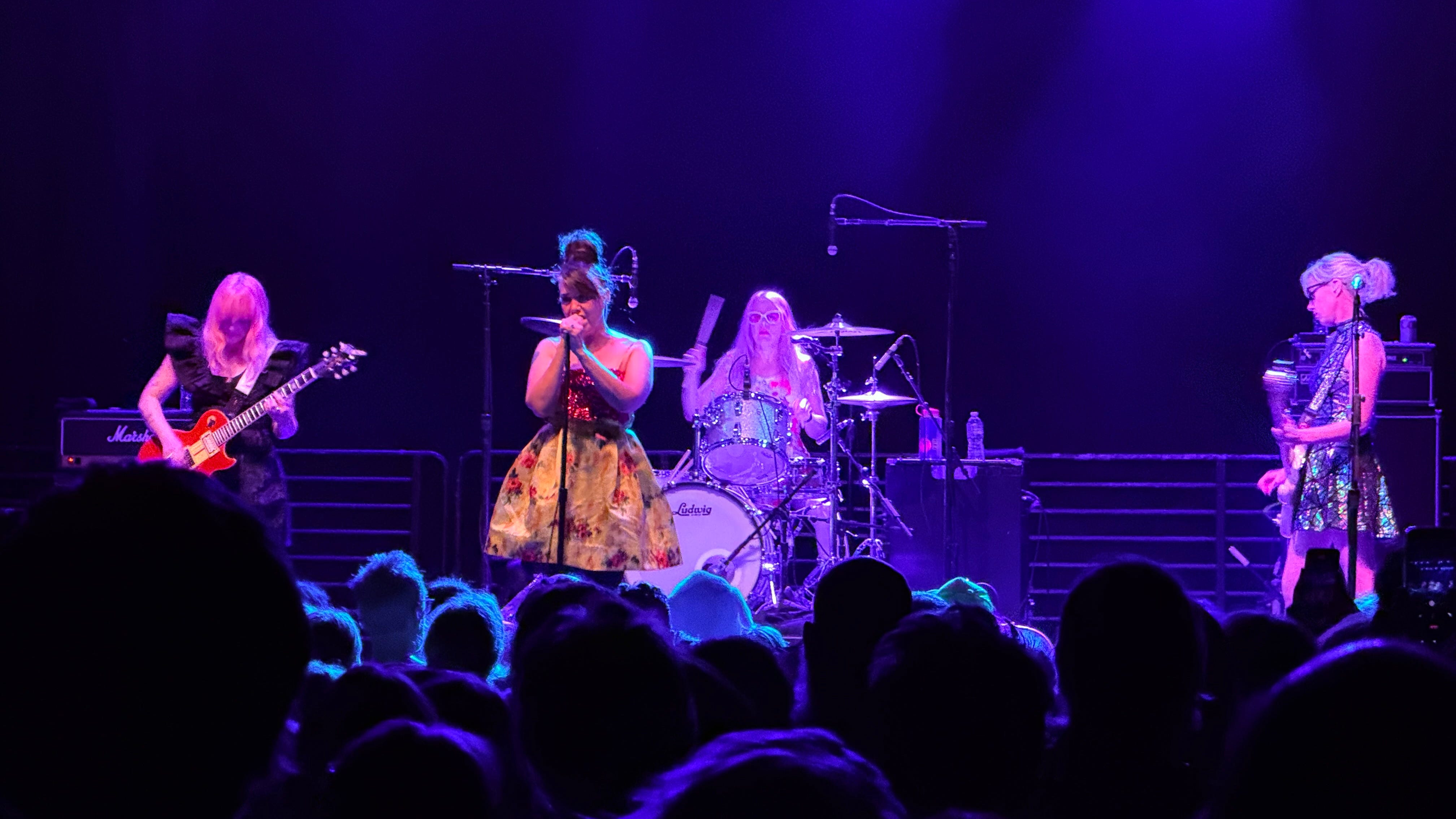
What warmed my heart was seeing so many mothers bringing their daughters to the show. I watched them walk in together, and I couldn’t help imagining those mothers 30 years ago, standing in a crowd of their own. Girls to the front.
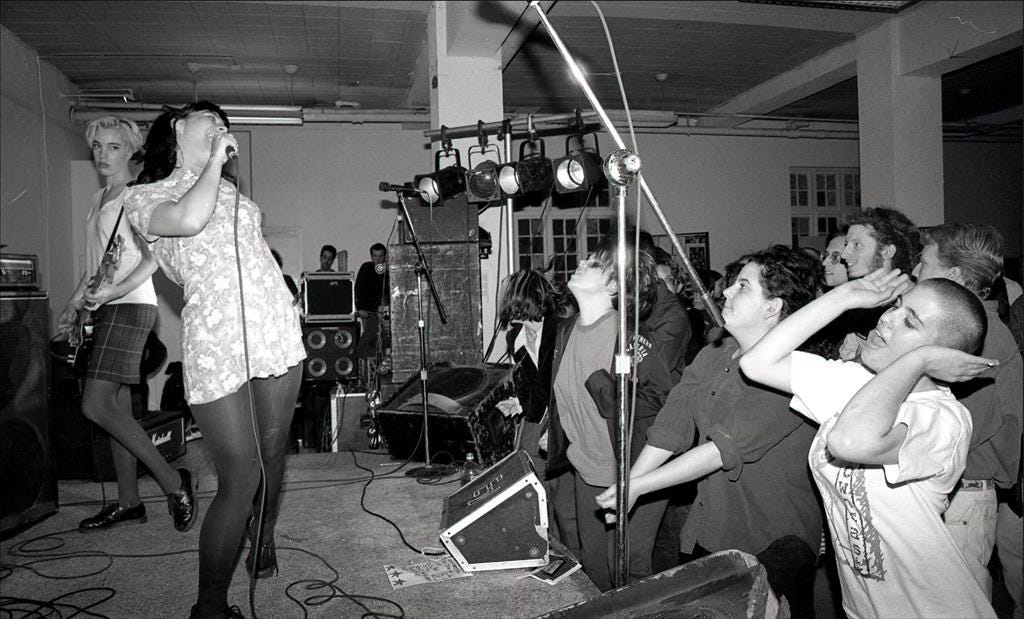
Now they were bringing their daughters.
It wasn’t just mothers, either. I watched a father drop off his daughter and her friends at the show. Kudos to the dad for getting them there. Although, judging by the way he immediately drove away, I’m guessing he wasn’t sticking around for Bikini Kill.
Lame.
But seeing all those young women there made me think about how important the riot grrrl movement was in the ‘90s—and how much I think something like it is still needed in 2026.
Because Bikini Kill isn’t just a band from someone’s parents’ record collection. For a young woman seeing them for the first time, there’s still something powerful about watching women take the stage, take up space, be loud, be angry, be funny, be unapologetic, and refuse to ask permission.
And maybe that matters even more now.
The Boys Had Rock. The Grrrls Had Something to Say.
When I think about the early ‘90s, a time when I was active in the music scene with my own band, I think about the big grunge bands: Nirvana, Pearl Jam, Soundgarden, Alice in Chains.
I love those bands. They changed rock music.
They took rock from the world of spandex and hair metal and replaced it with flannel, distortion and a much darker aesthetic. But when I think about what was actually changing the conversation, I think about something else.
I think about riot grrrl.
Bikini Kill. Sleater-Kinney. Team Dresch. Bratmobile. Huggy Bear. And all the other women who were creating a movement around music while challenging sexism, misogyny, sexual violence, inequality and the male-dominated culture surrounding them.
While some of the biggest male rock bands of the era were romanticizing drugs, addiction and the mythology of the tortured male rock star, riot grrrl was putting feminism and women’s experiences directly in the middle of the conversation.
That’s what made it feel different to me.
The music wasn’t just entertainment. It was a statement.
And somewhere along the way, even the language of riot grrrl got absorbed by the mainstream.
“GRRRL Power” became “Girl Power.”
And then came the Spice Girls.
Suddenly, something that had grown out of an underground feminist punk movement became a corporate pop slogan. “Girl Power” was being packaged, marketed and sold back to girls.
There is something almost absurd about taking a movement that was challenging the power structures around women and turning it into something you could put on a T-shirt and sell at the mall.
I’m not saying the Spice Girls weren’t important to their audience. They obviously were.
But riot grrrl wasn’t created to sell girls a product.
It was created by girls who were trying to change the culture around them.
That’s a very different kind of power.
The Grrrls Are Still Making Noise
Which brings me to today.
Recently, I was putting together an Instagram carousel featuring all of the artists who have become members of the Scroll Stopper Club since I started the YouTube channel.
And I noticed something.
The list leaned heavily toward women.
I thought about that for a while, because I hadn’t set out to make it that way.
I just kept finding women making music that grabbed me.
And I’ve come to a conclusion that is entirely subjective, but one I can’t ignore:
In my experience, women are making some of the most compelling music right now.
Look at Local News Legend, writing songs filled with pain and vulnerability and telling stories with an honesty that hits you in the gut.
Kilynn Lunsford, pushing songwriting into strange and compelling places with fascinating lyrics and soundscapes.
Mei Semones, moving between Japanese and English while combining jazz with something that sounds completely and unmistakably like her.
Joanna Wang, making music with the kind of imagination and eccentricity that reminds me of what made artists like Frank Zappa so fascinating.
I’m not saying there aren’t men making great music. There absolutely are.
The Dodies. Who Shot Scott. XComm. And, as it happens, my next Scroll Stopper is a male artist.
But when I look at the music that has genuinely excited me lately, the balance is heavily tilted toward women.
And I’m starting to wonder if there’s a reason for that.
Maybe I’m responding to the same thing I responded to in riot grrrl.
Artists who aren’t afraid to bring something personal into the music.
Artists who aren’t simply trying to sound cool.
Artists who have something to say.
The Grrrls Are Still Here
Last night, I watched Kilynn Lunsford open for Bikini Kill
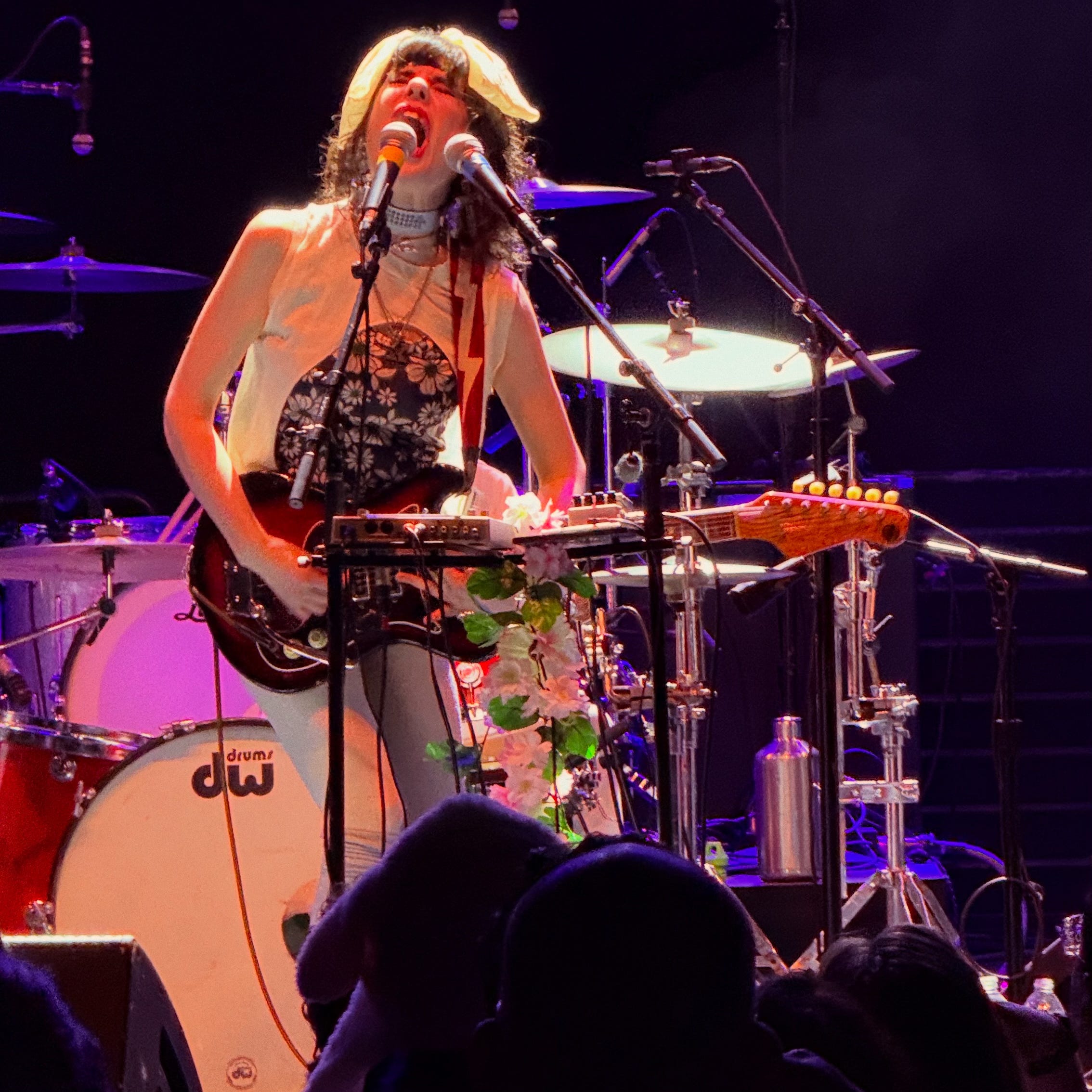
.And she was proof that the grrrls are still making noise.
Whether she knows it, or even wants the responsibility, I’m sure there were young women in that room who walked away feeling a little more empowered than when they walked in.
That’s what music can do.
A woman gets onstage and says, essentially:
This is who I am. I’m not going to make myself smaller for you.
And another woman in the audience hears it and thinks:
Maybe I don’t have to either.
That matters.
Especially now.
We need women who are willing to speak honestly. We need women who challenge sexism. We need men who are willing to challenge sexism within their own circles. We need young women to see women taking up space—not because they’re being given permission, but because they don’t need it.
That’s what I saw last night.
Not just a legendary punk band playing songs from 30 years ago.
I saw a mother bringing her daughter.
I saw young women watching other women stand on a stage and completely own it.
And I thought about those mothers.
Maybe some of them were standing in a crowd just like this one 30 years ago.
Girls to the front.
And now they’re bringing their daughters.
That’s a pretty incredible legacy.
And maybe that’s the real gift of GRRRL Power.